SoSoActive
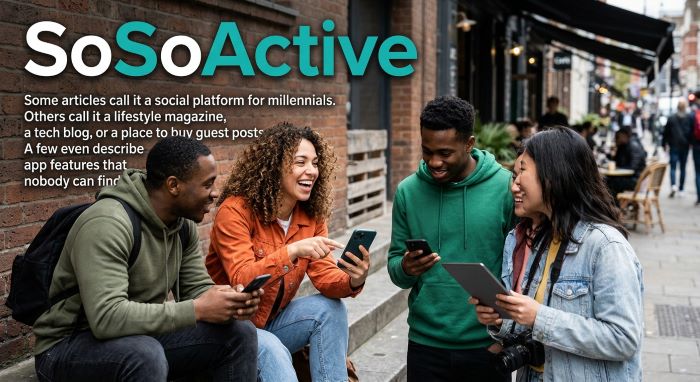
Type the name into a search engine in 2026 and you’ll get a strange mix of results. Some pages call it a buzzing online community with millions of users. Others call it a lifestyle magazine. A few say the original site is gone for good. The truth sits somewhere in the middle, and it tells a bigger story about how websites change hands, change purpose, and pick up myths along the way.
SoSoActive started life in 2011 as a small blog about music and technology. Today, the same web address hosts articles on loans, travel, fitness, and small business tips. This guide walks through where the site came from, who built it, what it publishes now, which popular claims don’t hold up, and how to read it with a clear head.
Quick Facts
| Detail | What We Know |
|---|---|
| Name | SoSoActive (also written Sosoactive or SoSoActive Media) |
| Launched | 2011 |
| Founder | Kelland “K-Diamondz” Drumgoole |
| Base | Dallas, Texas, according to its business profiles |
| Original focus | Social music, mobile music apps, artist news, and interactive marketing |
| Original tagline idea | Billed by its founder as “the first social music blog on the web” |
| Current focus | General topics such as business, finance, health, tech, education, and travel |
| Current owner | Not stated on the site |
| Community features | None found on the live site, despite claims online |
Where It All Began
The Founder
The site was the project of Kelland Drumgoole, who worked in the music business under the name K-Diamondz. Before he started his own media brand, he interned at TVT Records, the independent label known for hip hop, rock, and soundtrack releases. His work in promotion put him near artists such as Lil Jon, Pitbull, and the rock band Sevendust.
That background shaped the early site. Drumgoole knew how artists were trying to reach fans online, and he saw a gap. Social media and smartphones were changing the music business fast, but few outlets explained those changes in simple terms for fans and indie artists.
The 2011 Launch
Crunchbase lists the founding year as 2011 and describes the company as an interactive media brand covering social and mobile music. Its LinkedIn profile lists Dallas as its home and calls it a private company. In his own author bio, Drumgoole described himself as the CEO and editor of what he called the first social music blog on the web.
The pitch was clear. The blog would cover:
- News about music startups and new apps
- Updates on artists and releases
- Interviews with musicians and music tech founders
- Reviews of products for listeners and creators
- Tips on interactive and social media marketing for artists
The Music Tech Moment
The timing made sense. In 2011, Spotify had just launched in the United States. SoundCloud was growing as a home for new artists. Twitter and Facebook had become key tools for bands to talk to fans. Apps for making beats, sharing playlists, and finding concerts were popping up every month.
A blog that explained these tools in plain words had a real audience. Indie artists wanted to know which apps could help them grow. Fans wanted to know which services were worth a download. Small labels wanted marketing ideas that didn’t cost much.
How the Site Changed
From Music to Everything
Over time, the site drifted away from music. By 2026, music no longer leads the menu. The current site sorts its posts into broad sections such as:
- Business
- Finance
- Health
- Technology
- Education
- Travel
- Fashion and lifestyle
- Real estate, law, and insurance
Recent posts, according to reviews of the live site, cover topics like margin trading, personal loans, manual therapy, LinkedIn marketing, dropshipping, software tools, and structured cabling. Some older posts, such as gaming picks from 2019, still show up in its lists of popular articles.
No Sign of the Founder
The current site doesn’t mention Drumgoole or the original music mission. It doesn’t name an owner or an editor in chief. Bylines on recent posts credit a handful of writers, and the contact address listed is a free email account rather than a company domain.
There is no public record of a sale or transfer that explains the change. That’s not unusual. Domain names change hands all the time, and an older domain with years of history can be valuable to people who run content sites. When that happens, the new owner may keep the name but change everything else.
Signs of a Guest Post Site
Reviewers who checked the live site in 2026 noted several patterns common to sites built around paid guest posts:
- A very wide range of topics with no clear theme
- Posts written to target search terms, with links out to other businesses
- The same article appearing more than once under almost identical web addresses
- Submission pages that invite writers to send articles
- Little information about who runs the site or checks the content
None of this means the site is a scam. Many general content sites work this way. It does mean readers should treat the articles as general reading, not expert advice.
Then and Now
| Feature | 2011 Era | 2026 Era |
|---|---|---|
| Main topic | Social and mobile music | Business, finance, health, tech, travel, and more |
| Audience | Music fans, indie artists, small labels | General web readers and small business owners |
| Leadership | Kelland “K-Diamondz” Drumgoole, CEO and editor | Not disclosed |
| Content style | News, interviews, reviews, marketing tips | How-to guides and explainers |
| Contact | Company brand tied to its founder | Free email address |
| Community tools | Comments and social sharing, like most blogs of the time | No community features found |
Claims That Don’t Hold Up
Search for the name in 2026 and you’ll find many articles that describe a very different SoSoActive. These pages often share the same claims, almost word for word, which suggests they copied each other. Here are the most common ones, and why they don’t match the live site.
“A Platform With Millions of Users”
Some articles say the site has more than two million active users. There’s no public data to back this up, and the live site doesn’t have user accounts or profiles in the way a social platform would.
“Community Guilds and Spark Quests”
Several posts describe features called Community Guilds, Spark Quests, and a Spark Points reward system. Reviewers who checked the site found no sign of any of these.
“A Live Chat Hub for Gen Z”
Other pages call it a live chat community or an “engagement framework” for millennials and Gen Z. The current site works like a standard blog, with categories, search, and articles. There’s no chat.
“Phase 1 and Phase 2”
A few articles describe a move from “Phase 1” to “Phase 2,” as if the company announced a new roadmap. There’s no record of such an announcement from the site itself.
Why These Myths Spread
When a name gets search traffic, content farms rush to write about it. Many of these articles are written fast, sometimes by AI tools, and copy each other’s claims without checking the source. One made-up detail can spread across dozens of sites within weeks. The lesson is simple: when many pages say the same thing but none cite the original site, be careful.
How to Read the Site Today
If you land on SoSoActive through a search, here’s how to get value from it without being misled.
For General Reading
The site can be a fine starting point for light topics, such as travel ideas, simple tech tips, or lifestyle reading. Treat it like any other general blog.
For Health, Money, and Legal Topics
Be more careful here. Articles about loans, trading, insurance, medical treatment, or legal issues should always be checked against trusted sources:
- For health, check with a doctor or a trusted medical site such as the NHS or the Mayo Clinic.
- For money, check official sources such as your bank, a licensed adviser, or government consumer sites.
- For legal issues, check with a licensed lawyer or official government pages.
Check the Author and Date
Look at who wrote the post and when. If the author has no bio or other work you can find, and the post has no sources, treat its claims as opinions rather than facts.
Watch for Links
Many guest posts include links to businesses that paid for placement. That’s common on the web, but it means the article may lean toward a product or service. Think twice before buying something based on one blog post.
For Writers and Marketers
Some people search for the name because they want to publish there. Content sites that accept guest posts can help a business get its name in front of readers, but it pays to be smart about it.
| Question to Ask | Why It Matters |
|---|---|
| Who runs the site? | You want to know who you’re dealing with |
| Is there a fee? | Paid placements should be clear and fair |
| Does the site fit your topic? | A link on an unrelated site may do little for you |
| How much traffic does it get? | Free tools can give a rough idea |
| Are there duplicate posts? | Repeated content can be a sign of low quality |
| What are the content rules? | Good sites reject copied or poor work |
Search engines in 2026 reward helpful, original content and tend to discount links from sites that publish anything for a fee. A single strong article on a trusted site in your field is often worth more than many posts on general sites.
What the Story Teaches About the Web
Old Names, New Owners
SoSoActive is one of thousands of web brands whose names outlived their first purpose. A domain from 2011 carries years of history, links, and search presence. That history can make it attractive to buyers who want a head start for a new content site.
The Limits of Online Profiles
Business profiles on sites like Crunchbase and LinkedIn are useful, but they often reflect what a company said about itself at the start. They aren’t always updated when a site changes direction. The 2011 profile still describes a music media company, while the live site has moved on.
Checking Before Trusting
The many copycat articles about the site show how easy it is for false details to spread. Before you repeat a claim about any website, look at the site itself and at the oldest, most direct records you can find.
Why People Search for SoSoActive
There are a few common reasons:
- Curiosity. People see the name in search results or links and want to know what it is.
- Nostalgia. Some remember the music blog from the early 2010s.
- Legitimacy checks. Readers want to know if they can trust an article they found there.
- Guest posting. Marketers look for sites that accept submissions.
- Confusion. The mix of conflicting claims online leads people to dig deeper.
Lessons From Its Story
- Purpose can change. A site’s name may stay the same while its mission shifts.
- Look for the source. Business profiles and the live site matter more than copycat articles.
- Check high-stakes advice. Health, money, and legal topics need trusted experts.
- Be careful with viral claims. If many pages repeat the same detail with no source, question it.
- Know what you’re joining. Writers and marketers should research a site before paying to post there.
Final Thoughts
SoSoActive began as a small, focused idea: a social music blog that helped fans and artists make sense of a fast-changing industry. Its founder, Kelland “K-Diamondz” Drumgoole, brought real music business experience to the project in 2011.
In 2026, the name lives on, but the site is a different thing. It publishes broad articles on business, health, tech, and more, with no clear owner listed and none of the community features that many online posts claim. Read it as you would any general blog: useful for ideas, but worth double-checking when the stakes are high.
Key Takeaways
- SoSoActive was founded in 2011 by Kelland “K-Diamondz” Drumgoole, a music industry veteran who interned at TVT Records.
- The site began as a social and mobile music blog covering apps, artists, reviews, and marketing tips.
- Its business profiles list it as a small private company based in Dallas, Texas.
- In 2026, the site publishes general content on business, finance, health, tech, education, and travel.
- The current site names no owner and doesn’t mention its founder or original music focus.
- Claims about millions of users, Community Guilds, Spark Quests, and live chat are not supported by the live site.
- Check health, money, and legal articles on the site against trusted expert sources.