Modern Mullet Guide
The mullet used to be a punchline. In the 1980s and early 1990s, it was the hairstyle of rock stars, hockey players, and country singers, famous for its “business in the front, party in the back” shape. For years after, it was treated as a fashion mistake. Then something surprising happened: it came back, and this time it looked good.
Today’s version is softer, more textured, and far more wearable than the stiff cuts of the past. Barbers blend it with fades, add layers and fringe, and adapt it for curly, straight, thick, and fine hair. Celebrities, athletes, and influencers have helped turn it into one of the most requested cuts in barbershops and salons.
This guide covers what makes the new version different, the most popular variations, styles for men and women, fades and undercuts, how to pick a style for your hair type and face shape, what to tell your barber, how to style it, and how to keep it looking fresh.
What Is a Modern Mullet?
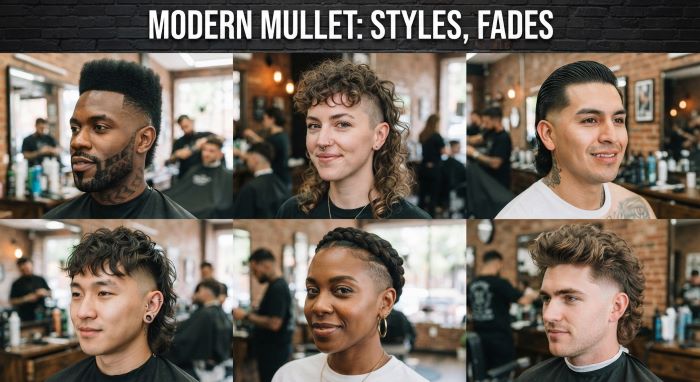
A modern mullet is an updated take on the classic mullet haircut. It keeps the signature shape, with shorter hair on the top and sides and longer hair at the back, but the transitions are smoother and the overall look is more natural.
Key features include:
- Soft blending between short and long sections instead of a harsh step.
- Texture and layers on top for movement.
- Fades or tapers on the sides for a clean, modern finish.
- Flexible length at the back, from just past the collar to shoulder length.
- Fringe or bangs in many versions.
The result is a cut that can look edgy, relaxed, or polished, depending on how it’s styled.
Modern vs. Traditional Mullet
The traditional mullet peaked in the 1980s and early 1990s. Musicians such as Billy Ray Cyrus and David Bowie, along with many athletes, helped make it famous. The word “mullet” itself became popular after the Beastie Boys used it in their 1994 song “Mullet Head.”
Here’s how the two compare:
| Feature | Traditional mullet | Modern version |
|---|---|---|
| Top and sides | Short, often flat | Textured, layered, or faded |
| Back | Long and often straight | Long but blended and textured |
| Transition | Sharp, obvious step | Smooth, gradual blend |
| Styling | Heavy hairspray, big volume | Light products, natural movement |
| Overall vibe | Retro, sometimes ironic | Fashion-forward and wearable |
| Who wears it | Men, for the most part | Men, women, and nonbinary people |
The biggest difference is balance. Today’s cut connects the front and back in a more natural way, so it looks intentional rather than outdated.
Why Is the Modern Mullet Haircut So Popular?
Several trends brought the cut back:
- Nostalgia. Fashion loves revisiting the 1980s and 1990s.
- Social media. TikTok and Instagram made bold cuts go viral, with barbers sharing dramatic before-and-after videos.
- Celebrities and athletes. Stars in music, film, and sports, from soccer players to Hollywood actors, have worn mullet-inspired cuts.
- Self-expression. The cut feels playful and unique, a way to stand out.
- Low daily styling. Once cut well, many versions need only a little product.
- Versatility. It works for many hair types and can be adapted for school, work, or nights out.
Is the Modern Mullet Still in Style in 2026?
Yes. The cut has moved from a passing fad into a staple style. In 2026, barbers report steady demand for softer, more blended versions, above all textured mullets with taper or burst fades and shaggy cuts that cross over with the wolf cut.
Popular Variations to Try
Classic Modern Mullet
The classic version keeps short sides, a textured top, and a longer back, with smooth blending. It’s a good choice for a first-timer.
Textured Mullet
This style adds choppy layers on top for a messy, lived-in look. It’s popular with men who want volume and movement.
Curly Mullet
Natural curls give the cut built-in shape and volume. Curls on top and in the back create a soft, bold silhouette.
Shaggy Mullet
The shaggy version uses lots of layers through the top and back, often with curtain bangs. It has a 1970s rock feel.
Tapered Mullet
A taper shortens the hair around the ears and neckline, keeping the sides neat while leaving length in the back.
Burst Fade Mullet
A burst fade curves around the ear in a half-circle, leaving more length at the back. This is one of the most popular combinations today.
Wolf Cut Mullet
This hybrid blends the mullet’s longer back with the wolf cut’s heavy layering and volume.
Short Mullet With Fringe
A short version with bangs or a fringe is easy to wear and grows out with ease. It suits people who want a subtle take.
Layered Modern Mullet
Long, soft layers create movement from crown to nape. This version works well for women and anyone with medium to long hair.
Korean-Inspired Mullet
Inspired by K-pop stars and Korean fashion, this style tends to feature soft fringe, smooth layers, and a gentle, rounded shape. It’s often less dramatic in the back than Western versions.
Edgy Style With Shaved Sides
For a bolder look, the sides are shaved close or cut into an undercut, creating strong contrast with the longer back.
Styles for Men and Women
Styles for Men
For men, popular choices include:
- Textured top with burst fade for a sharp, sporty look.
- Curly top with taper for natural volume.
- Short mullet for a subtle, office-friendly style.
- Shaggy mullet for a rock-inspired vibe.
Pairing It With a Beard
A beard can balance the cut and give it a rugged feel. Keep the beard trimmed and tidy and blend it with the sideburns. A short stubble beard pairs well with textured cuts, while a fuller beard suits longer, shaggy styles.
Styles for Women
Women often wear softer, layered versions, such as:
- Shag mullet with curtain bangs.
- Pixie mullet, with short sides and top and a little length at the nape.
- Curly mullet that shows off natural texture.
- Long layered mullet that keeps length while adding shape.
Many women prefer to skip the fade and use soft layers instead, which makes the style easy to grow out.
Short vs. Long Styles
| Length | Look | Best for |
|---|---|---|
| Short | Clean, subtle, easy to style | Beginners, work settings, fine hair |
| Medium | Balanced, textured | Most hair types |
| Long | Bold, dramatic, rock-inspired | Thick, wavy, or curly hair |
Fades and Undercuts
Fades are what make many of today’s mullets look sharp and current.
Mullet Fade Options
A mullet fade blends short sides into longer hair on top and at the back. Common choices include:
| Fade type | What it looks like | Vibe |
|---|---|---|
| Burst fade | Curves around the ear, leaving length at the back | Sporty and modern |
| Taper fade | Short only near the ears and neckline | Clean and subtle |
| Drop fade | Drops lower behind the ear | Smooth, curved shape |
| Low fade | Starts low on the head | Natural and soft |
| High fade | Starts high on the sides | Bold and dramatic |
| Undercut | Sides shaved to one short length | Edgy and high contrast |
Modern Mullet Fade With Taper
A modern mullet fade with a taper is one of the most popular combinations. The taper keeps things neat around the ears and neck, while the back stays long and textured. It’s a great pick for people who want a cleaner look for work or school.
Shaved Sides
Shaving the sides close with clippers creates maximum contrast. Some people add hair designs or lines for extra flair.
Choosing the Right Cut for Your Hair Type and Face Shape
Curly Hair
Curly hair is perfect for a mullet because curls add natural volume and shape. Ask your barber to leave enough length on top for the curls to form, and use a taper or burst fade to keep the sides tidy.
Straight and Wavy Hair
Straight hair can look sleek with a textured top and blended back, but it may need texture spray or sea salt spray for movement. Wavy hair is easy to style and gives the cut a relaxed, beachy feel.
Thick Hair
Thick hair holds shape well but can get bulky. Ask for thinning or texturizing to remove weight, above all at the back.
Thin Hair
Fine or thin hair works best with shorter, layered versions. Avoid very long backs, which can look stringy. Use volumizing products to add body.
Face Shape Guide
| Face shape | Best approach |
|---|---|
| Oval | Almost any style works |
| Round | Add height on top and keep the sides short to lengthen the face |
| Square | Soft layers and fringe help soften a strong jawline |
| Long or oblong | Add width with volume on the sides and fringe |
| Heart | Medium length with fringe balances a wider forehead |
| Diamond | Fringe and fuller sides balance sharp cheekbones |
Does It Suit Everyone?
Most people can wear some version of the cut. The key is choosing the right length, fade, and texture for your hair and face. A skilled barber can tailor the style to suit you.
How to Ask Your Barber
Clear communication is the best way to get the cut you want.
- Bring photos. Show two or three pictures from the front, side, and back.
- Describe the top. Say how long you want it and whether you want texture, layers, or fringe.
- Describe the sides. Choose a fade type, such as a burst, taper, or low fade, and how short to go.
- Describe the back. Say how long you want it, such as “just below the collar” or “to the shoulders.”
- Mention your hair type and how you plan to style it.
- Ask about upkeep. Find out how often you’ll need trims.
A sample request might be: “I’d like a textured mullet with a mid burst fade, about three inches on top with some choppy texture, and the back blended down to just past my collar.”
Styling at Home and Best Products
How to Style It at Home
- Start with damp hair. Towel dry with care.
- Apply a prep product such as sea salt spray or mousse for texture.
- Blow dry with your fingers to create volume on top and movement in the back.
- Add a finishing product such as matte paste or clay to define the top.
- Shape the back with your fingers, pushing it a little outward for a lived-in look.
- Set with light hairspray if needed.
For curly hair, use a curl cream or leave-in conditioner and let your hair air dry or diffuse it for defined curls.
Best Hair Products
| Product | Best for | How to use |
|---|---|---|
| Sea salt spray | Texture and beachy waves | Spray on damp hair before drying |
| Matte paste or clay | Hold and definition | Work a small amount through dry hair |
| Texture powder | Volume at the roots | Sprinkle on roots and tousle |
| Mousse | Volume for fine hair | Apply to damp roots before drying |
| Curl cream | Defined curls | Apply to wet curls and air dry |
| Light hairspray | Flexible hold | Mist a little to finish |
| Leave-in conditioner | Softness and frizz control | Use on damp hair |
Low-Maintenance Styles
Low-maintenance options include short mullets with tapers, curly mullets that rely on natural texture, and versions with soft layers that look good air-dried.
Maintenance, Trims, and Growing It Out
How Often to Trim
Most styles need a trim every 3 to 6 weeks to keep fades crisp and the shape balanced. Faded versions need trims more often, while longer layered versions can go longer between visits.
Maintenance Tips
- Wash with a gentle shampoo and use conditioner, above all on the longer back section.
- Use heat protectant before blow drying.
- Don’t cut the back yourself; uneven trims are hard to fix.
- Keep the neckline neat between cuts.
How to Grow It Out
If you’re ready to move on, ask your barber to blend the back into the sides as the top and sides grow. Over a few months, the cut can transition into a shag, a longer layered style, or a classic medium-length cut. Patience is key, since growing out the sides takes time.
Mullet vs. Wolf Cut: What’s the Difference?
| Feature | Mullet | Wolf cut |
|---|---|---|
| Shape | Shorter top and sides, longer back | Heavy layers all over, more volume at the crown |
| Sides | Often faded or tapered | Layered, not faded, in most cases |
| Back | Much longer than the front | Longer but blended with layers |
| Vibe | Retro and edgy | Shaggy and wild |
| Best for | Many hair types, short to long | Medium to long hair with natural texture |
The wolf cut is like a cross between a shag and a mullet. It has more volume and layers throughout, while the mullet focuses on a clear contrast between front and back.
Common Questions
Is a mullet professional?
A short, well-blended version with a taper can look polished enough for many workplaces. Bold, long, or shaved styles may be better for creative fields.
How long does hair need to be for a mullet?
You’ll need at least 2 to 3 inches on top and a few inches at the back. For longer styles, grow the back to the collar or beyond.
Can I get a mullet with thin hair?
Yes. Choose a short, layered version and use volumizing products.
How much does the cut cost?
Prices vary by city and shop. Many barbershops charge about the same as a standard fade or men’s cut, while salons may charge more for layered styles.
Can women wear this style?
Yes. Women often wear soft, layered, or shaggy versions with fringe.
What is a burst fade mullet?
It’s a cut where the fade curves around the ear in a half-circle, leaving the back long. It’s one of the most popular modern combinations.
Key Takeaways
- The modern mullet keeps short sides and a longer back but uses soft blending, texture, and layers.
- It’s more wearable than the 1980s version and suits men, women, and many hair types.
- Popular variations include textured, curly, shaggy, tapered, burst fade, and Korean-inspired mullets.
- A mullet fade, such as a burst or taper fade, gives the cut a clean, modern finish.
- Choose your style based on hair type and face shape, and bring photos to your barber.
- Sea salt spray, matte paste, and curl cream are key styling products.
- Most versions need trims every 3 to 6 weeks.
- The wolf cut has more layers and volume overall, while the mullet focuses on front-to-back contrast.