

What Are Smart Ways to Save Money on Groceries?
You go in for milk and bread and leave with a full cart and a receipt that makes you wince. Groceries are one of the few big expenses that hit every single week, so small mistakes add up fast.
The good news is that groceries are also one of the easiest costs to control. You don’t need to clip coupons for hours or live on rice and beans. This guide walks through smart ways to save money on groceries, from planning and shopping to storing and cooking, so you can eat well and keep more cash in your pocket.
Why Grocery Bills Creep Up
Before fixing the problem, it helps to know where the money goes. Most overspending comes from a few common habits:
- Shopping without a plan. Wandering the aisles leads to impulse buys.
- Shopping hungry. Everything looks good on an empty stomach.
- Buying for meals that never happen. Good intentions turn into wilted spinach.
- Paying for convenience. Pre-cut fruit, bagged salads, and single-serve snacks cost more per ounce.
- Wasting food. Leftovers and produce get forgotten in the back of the fridge.
Fix even two of these, and you’ll see a difference.
Plan Before You Shop
Make a Weekly Meal Plan
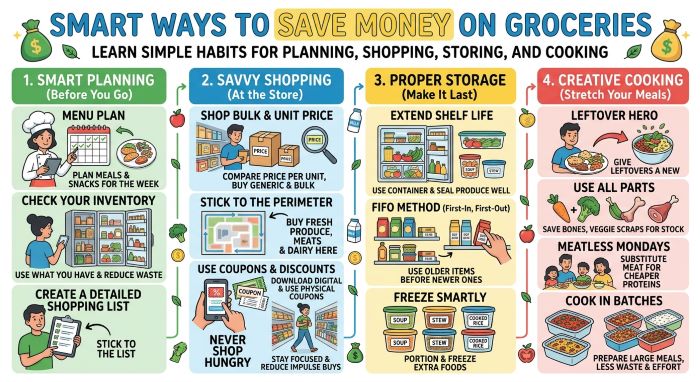
A meal plan is one of the most powerful smart ways to save money on groceries. Spend 15 minutes before your shopping trip deciding what you’ll eat for the week. You don’t need a fancy system. A note on your phone works.
Start with:
- What you already have. Check the fridge, freezer, and pantry first.
- Your schedule. Plan quick meals for busy nights and bigger cooking for slower days.
- Overlapping ingredients. If you buy cilantro for tacos, plan a second meal that uses the rest.
- Leftover nights. Build in one or two nights to finish what’s left.
Write a List and Stick to It
Once you have a plan, turn it into a shopping list grouped by store section: produce, dairy, meat, pantry, and frozen. This keeps you moving through the store and away from tempting aisles. If something isn’t on the list, it doesn’t go in the cart, unless it’s a true staple on a great sale.
Set a Grocery Budget
Decide how much you’ll spend each week or month. Tracking it, even with a simple notes app, makes you more aware of your choices.
Shop Smarter at the Store
Compare Unit Prices
The shelf tag usually shows a unit price, like cost per ounce or per pound. This is the best way to compare products of different sizes. Bigger packages are often cheaper per unit, but not always. A quick glance at the unit price helps you avoid paying more for the “value” size.
Buy Store Brands
Store brands, also called private labels, are often made in similar facilities as name brands and can cost a lot less. Try store-brand versions of basics like flour, sugar, canned tomatoes, pasta, frozen vegetables, and spices. If you don’t like one, go back to the name brand.
Shop the Perimeter, Then Be Selective in the Middle
Fresh foods like produce, meat, and dairy usually line the outer walls of the store. The middle aisles hold processed foods and snacks, where impulse buys happen. Grab what you need from the middle with your list in hand, and skip the browsing.
Look High and Low
Stores often place pricier items at eye level. Cheaper options, including store brands, often sit on the top or bottom shelves. Take a second to scan the whole shelf.
Shop Alone When You Can
Kids, partners, and roommates can add extra items to the cart. If possible, shop solo with your list, or set clear rules before you go.
Use Sales, Apps, and Loyalty Programs
Join Store Loyalty Programs
Most grocery chains offer free loyalty programs with member-only prices, digital coupons, and fuel rewards. Sign up at the stores you visit most. Many apps let you load coupons to your account in seconds, so you don’t need paper clippings.
Check Weekly Ads
Stores publish weekly ads online and in their apps. Plan meals around what’s on sale. If chicken thighs are discounted this week, that’s your protein for a few dinners.
Use Cash-Back Apps
Cash-back and receipt-scanning apps can give you a small reward for items you already buy. The amounts are small per trip, but they add up over a year.
Stock Up With Care
When non-perishable staples you use often go on sale, buy extra. Good candidates include canned beans, pasta, rice, frozen vegetables, and toiletries. Only stock up on things you’ll use before they expire.
Choose the Right Stores
Where you shop can matter as much as what you buy.
| Store Type | Best For | Watch Out For |
|---|---|---|
| Discount grocers | Everyday low prices on basics | Smaller brand selection |
| Warehouse clubs | Bulk staples, meat, and household items | Membership fees and oversized packs |
| Traditional supermarkets | Sales, loyalty deals, wide selection | Higher regular prices |
| Farmers markets | Seasonal produce, end-of-day deals | Prices vary by vendor |
| Ethnic and international markets | Spices, rice, beans, and produce | Varies by store |
Many people save by splitting their shopping: basics at a discount grocer, bulk items at a warehouse club, and sale items at a supermarket. International markets are especially worth a look for spices, dried beans, rice, and fresh herbs, which often cost less there.
Buy Foods That Stretch Your Budget
Some foods give you a lot of meals for little money. Build your plan around these budget heroes:
- Dried beans and lentils: Cheap, filling, and full of protein.
- Rice, oats, and pasta: Shelf-stable bases for countless meals.
- Eggs: A versatile protein for breakfast, lunch, or dinner.
- Frozen vegetables and fruit: Picked at peak ripeness and less likely to go to waste.
- Whole chickens: Often cheaper per pound than parts, and the bones make broth.
- Seasonal produce: In-season fruits and vegetables usually cost less and taste better.
- Cabbage, carrots, onions, and potatoes: Inexpensive and long-lasting.
Eat Less Meat, or Use It in New Ways
Meat is often the priciest part of a meal. You don’t have to go vegetarian. Try a few meatless meals each week, or use meat as a flavor booster instead of the star. A small amount of sausage in a big pot of beans or soup goes a long way.
Cut Food Waste
Wasted food is wasted money. A large share of food bought in many households ends up in the trash. These habits help:
Store Food the Right Way
- Keep herbs in a glass of water in the fridge, like flowers.
- Store bananas away from other fruit so they don’t ripen everything too fast.
- Wrap cheese in wax paper or parchment instead of plastic.
- Keep potatoes and onions in a cool, dark place, but not together.
Use the “First In, First Out” Rule
When you unpack groceries, move older items to the front of the fridge and pantry. That way, you use them before they go bad.
Freeze More
Your freezer is a money-saving tool. Freeze bread, extra meat, cooked grains, soups, ripe bananas, and leftover sauces. Label everything with the date.
Understand Date Labels
“Best by” and “sell by” dates are often about quality, not safety. Many foods are fine to eat past those dates if stored well. Use your senses and common sense, and always follow “use by” dates on items like infant formula and certain meats.
Cook More at Home
Eating out and ordering delivery cost far more than home cooking. Cooking at home is one of the most effective smart ways to save money on groceries, because it lets you use everything you buy.
Batch Cook
Make big batches of soup, chili, pasta sauce, or grains on the weekend. Portion them out for lunches or freeze them for busy nights.
Cook From Scratch
Pre-made sauces, seasoning packets, and boxed meals cost more than making them yourself. A simple homemade sauce from canned tomatoes, garlic, and herbs costs a fraction of a jarred one.
Explore Budget-Friendly Cuisines
Many of the world’s best cuisines are built on simple, affordable ingredients. If you want inspiration, our guide to Easy Uruguayan Recipes at Home shows how dishes like milanesa, tortas fritas, and pascualina turn basic ingredients into hearty meals. Simple salads are another cheap way to round out a plate. Check out the Best Ensalada Mixta Near Me for ideas on the classic mixed salad of lettuce, tomato, and onion, which you can make at home for very little.
Repurpose Leftovers
Turn leftover roast chicken into tacos, fried rice, or soup. Use stale bread for croutons or breadcrumbs. Toss soft vegetables into a frittata or stir-fry.
Small Habits That Add Up
Here are a few more smart ways to save money on groceries that take almost no effort:
- Never shop hungry. Eat a snack before you go.
- Bring your own bags. Some stores charge for bags.
- Skip pre-cut produce. Cut it yourself and save.
- Buy whole blocks of cheese. Shred it at home.
- Make your own coffee. Daily café drinks add up fast.
- Drink tap water. Use a filter instead of buying bottled water.
- Grow herbs. A pot of basil or parsley on the windowsill pays for itself fast.
- Check your receipt. Price mistakes happen, and stores usually fix them.
A Simple Weekly Routine
Putting it all together, here’s an easy routine that combines the best smart ways to save money on groceries:
- Friday or Saturday: Check the fridge and pantry. Look at weekly ads.
- Same day: Plan 5 to 7 meals around sales and what you have.
- Write your list by store section.
- Shop once a week with your list and a full stomach.
- Unpack smart: Older items to the front, extras to the freezer.
- Batch cook one or two staples for the week.
- Midweek: Do a quick fridge check and use up anything close to going bad.
Follow this for a month, and these smart ways to save money on groceries should show up as a smaller bill and less food in the trash.
Final Thoughts
Saving money on groceries isn’t about sacrifice. It’s about planning ahead, shopping with intention, and using what you buy. The smart ways to save money on groceries in this guide work for singles, couples, and big families alike. Start with one or two changes, like meal planning and buying store brands, then add more as they become habits.
Small savings add up over time.
Key Takeaways
- Smart ways to save money on groceries start with a weekly meal plan and a shopping list you stick to.
- Compare unit prices, try store brands, and check high and low shelves for better deals.
- Join loyalty programs, check weekly ads, and stock up on non-perishable staples when they go on sale.
- Mix store types, such as discount grocers, warehouse clubs, and international markets, to get the best prices.
- Build meals around budget-friendly foods like beans, rice, eggs, frozen vegetables, and seasonal produce.
- Cut food waste with proper storage, the “first in, first out” rule, and smart use of your freezer.
- Cook at home, batch cook, and repurpose leftovers to get the most from every grocery dollar.